
A plumbing stack is the main vertical pipe in a house. The soil stack carries wastewater down to the drain line, and the vent portion runs up through the roof to let sewer gases out and fresh air in so drains flow smoothly. When the stack cracks, clogs or leaks, you see odd symptoms far from the actual failure, which is why it is often misdiagnosed.
Symptoms of a stack problem
| Symptom | Possible cause | Where it shows |
|---|---|---|
| Gurgling in drains | Blocked vent at the roof | Sinks, tubs and toilets |
| Sewer smell indoors | Cracked pipe or dry trap | Near walls, attic or bathroom |
| Slow drains in several fixtures | Partial clog in the stack or main | Whole-house |
| Stain on a wall or ceiling | Leak at a cracked section or joint | Near the stack |
| Water running in the wall after a flush | Cracked or separated joint | Inside the wall |
| Roof leak around the vent pipe | Failed flashing boot | Ceiling near the pipe |
Why stacks fail
Old cast iron stacks corrode from the inside and eventually crack or separate at the joints. Houses built in the middle of the last century often used cast iron for drains, and the pipe lasts for decades but not forever. Clay and early plastic stacks have their own failure modes. At the roof, the rubber boot around the vent pipe dries out and cracks in the sun, letting water down the pipe and into the ceiling. A blocked vent from leaves, a nest or debris causes the gurgling.
Hearing gurgling or smelling sewage?
Call and describe it. We can often tell by the symptoms where to look first.
How a plumber finds the problem
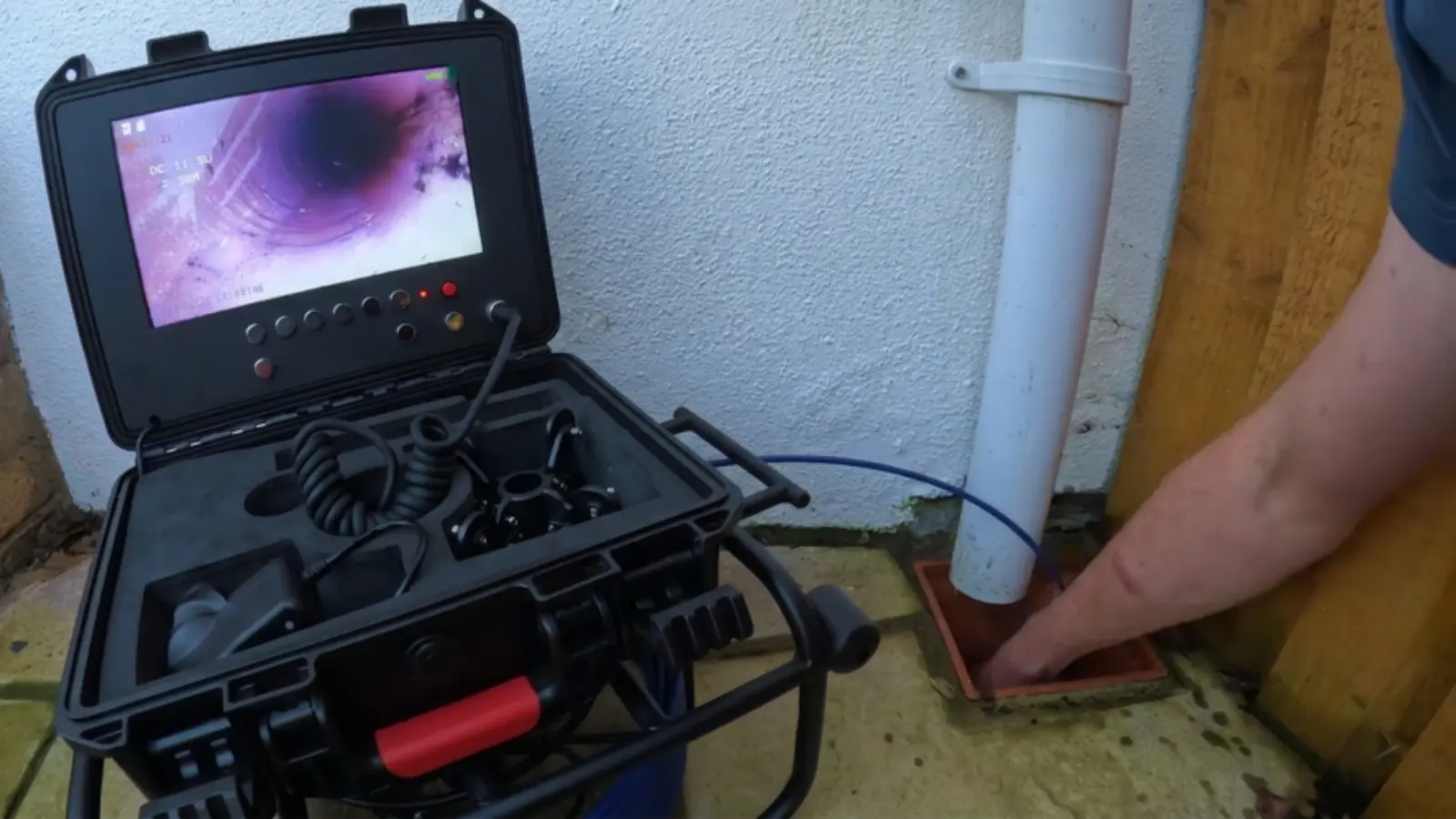
We start with a walk through: listening for gurgling, checking traps for water, and looking at the roof vent. A smoke or water test shows where gas or water escapes. A camera can go down the vent from the roof or up the drain from a cleanout to look at the stack's interior. Finding a crack inside a wall without opening it is a matter of combining these tests.
Repair options
- Clearing a blocked vent with a cable or a hose from the roof
- Replacing a cracked section with new pipe and couplings that connect to the old pipe on either side
- Replacing the flashing boot at the roof penetration
- Replacing a full stack where the pipe is corroded throughout
- Lining a section where access is limited and the pipe is intact enough to hold a liner
A section repair often requires opening a wall or ceiling. The plumber cuts out the failed piece, fits a new section and connects it with a no-hub coupling or an approved fitting. Drywall patching follows. A full replacement is a bigger job and may require coordination with roofing, since the stack exits through the roof.
Haltom City local note
Haltom City's population went from 5,760 in 1950 to 23,133 in 1960, according to the Handbook of Texas, so many homes here date from the postwar boom. Houses of that age commonly have cast iron drain and stack pipe, which is exactly the material that corrodes from the inside. A camera look is the practical way to learn the condition of your stack before it fails in a wall.
The city has adopted the 2021 International Plumbing Code (IPC), which governs stack sizing and venting, and its permit form lists a 4 inch minimum for a building sewer. Contractors must be registered to pull permits, and permitted plumbing work is inspected.
Safety and sewer gas
Sewer gas contains hydrogen sulfide and methane. A faint smell now and then is usually a dry trap, which you can fix by running water in unused fixtures. A persistent smell is a sign of a leak, and should not be ignored. If you smell a strong sulfur odor, ventilate the house and call. Methane can be flammable at high concentrations, though that is rare in a house.
Roof work and safety
Working on a roof vent is a fall risk. We do not recommend a homeowner climb on a steep or wet roof. A quick look from the ground with binoculars may show a bird nest or a cracked boot. Anything beyond that is best left to someone with the right equipment.
Cost and insurance
The cost of a stack repair depends on access, material, length and whether roofing is involved. A clogged vent is the cheapest fix. A buried cast iron section inside a finished wall costs far more. Insurance usually excludes wear and corrosion but may cover damage from a sudden leak. Ask your insurer before the repair, and photograph the damage.
Next steps
If the drains gurgle but there is no obvious blockage, a sewer camera inspection shows what is happening in the drain line. A stack that has cracked and is leaking inside the wall is also a leak detection question. We serve Haltom City and neighboring North Richland Hills, and our service area page lists the rest.
Sewer smell or leak?
Call any hour. We answer 24/7.
What to do if you suspect a stack problem
- Stop running water in the fixtures nearest the stack
- Keep people away from a wet or stained wall or ceiling that may be sagging
- Do not cut into a wall to look for the pipe, because it may carry sewage
- Take photos and note where the stain started and when you first noticed it
Plumbing stack questions
The main vertical drain and vent pipe in a house. It carries waste down and lets air in so drains flow.
A blocked or restricted vent is the common cause. A partial clog in the main can do the same.
Yes. A cracked section or a failed joint can leak inside a wall and show up as a stain, a smell or a sound.
Replacing a section may. Ask the building department. Contractors must be registered to pull permits.
Many last for decades, but they corrode from the inside. A camera can tell you how much life is left.