
Walk down the water treatment aisle and every product promises clean water. What they remove differs a great deal. Sediment filters catch grit. Carbon filters reduce chlorine and improve taste. Softeners handle hardness. Reverse osmosis cleans drinking water at one tap. Picking the right one starts with knowing what is in your water, so this guide starts with the city's own numbers.
What Haltom City's water report says
The city's 2025 water quality report describes surface water, with treatment data labeled for Fort Worth and a source in the Tarrant Regional Water District system. It lists hardness from 108 to 150 parts per million, about 6 to 9 grains per gallon. The disinfectant is chloramine, with a 2025 average of 2.63 parts per million and a range from 0.7 to 4.0. Those two facts set the agenda.
| Complaint | Likely cause | Filter or system | Does not fix |
|---|---|---|---|
| Pool or chemical taste | Chlorine or chloramine | Catalytic carbon | Hardness |
| White scale and spots | Hardness | Salt-based softener | Taste and chloramine |
| Grit or cloudy water | Sediment | Sediment filter | Dissolved minerals |
| Drinking water taste at one tap | Dissolved solids and taste | Reverse osmosis | Whole-house issues |
| Rusty tint | Old iron pipe | Sediment filter, then repipe | Source of the rust |
Chloramine needs the right carbon
Many people assume a carbon filter removes anything related to chlorine. Ordinary carbon does a decent job on chlorine but struggles with chloramine, which is more stable. Catalytic carbon is the type designed to reduce chloramine, and it works best at a slower flow, so the tank has to be sized properly. A filter that is too small passes chloramine, and one that is neglected loses effect over time.
Which filter fits your house?
Call and tell us what bothers you at the tap. We will start with the problem, not a product.
Do you need a softener too?
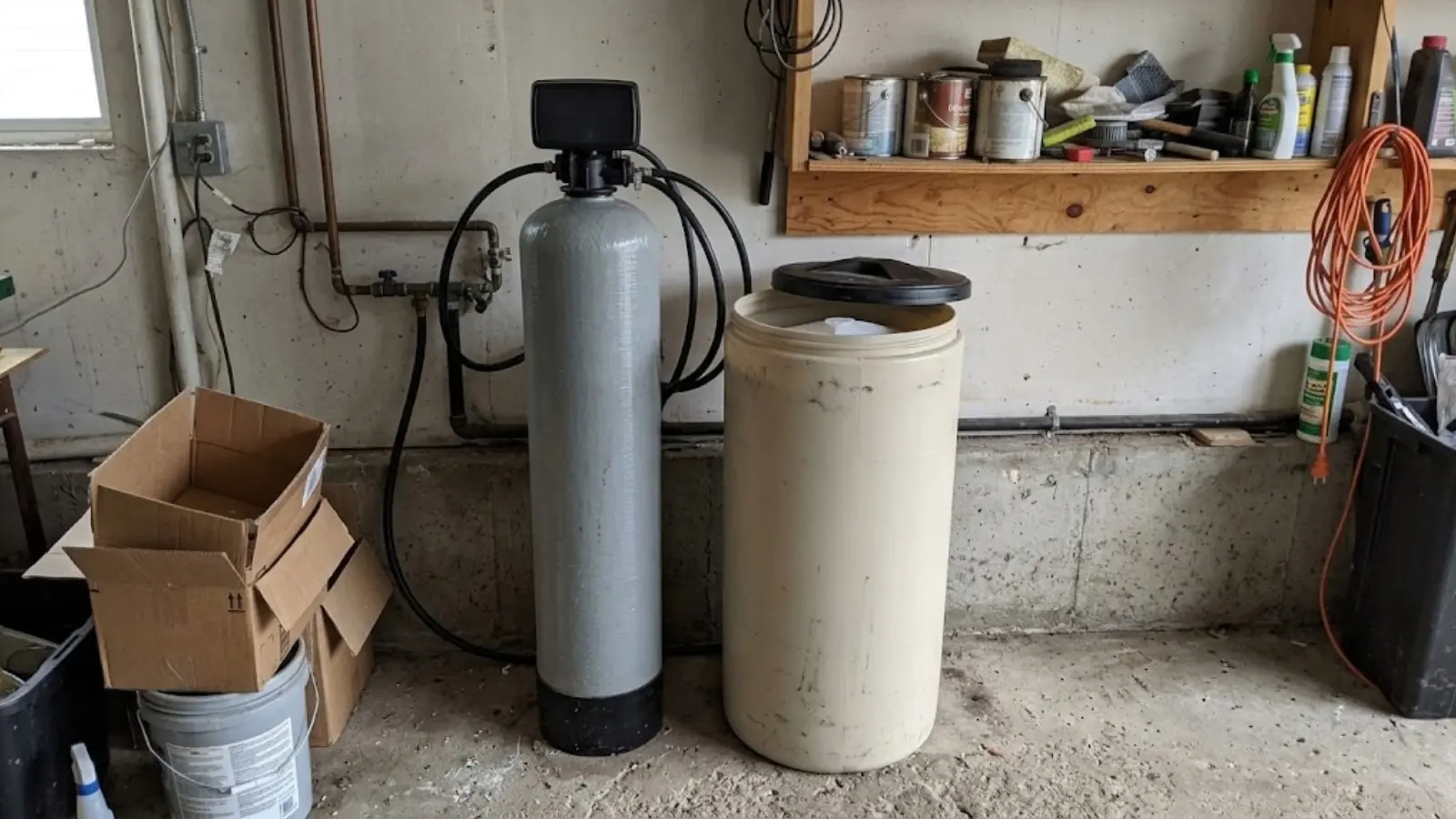
Filters and softeners do different jobs, and carbon does not soften. If scale on fixtures and spots on glassware are your complaints, a softener is the answer. If it is taste, the answer is carbon. Many households in water like this end up with both, with the softener first on the line and a carbon filter or a kitchen reverse osmosis unit after. Water softener and filtration explains how the two are sized.
Haltom City local note
The city publishes its own water quality report, and it is the best starting point. It reports results for the water as it leaves the treatment system, not at your tap. If a taste or a stain appears only in your house, the cause may be your plumbing, and a filter will not fix a corroding pipe.
The city says that it owns the water main and service lines up to the meter and the owner owns the line from the meter into the building. Any filter or softener goes on your side, after the meter and the main shutoff.
Installation basics
- A bypass valve so you can service or remove the system without shutting off the house
- Space and a drain for backwash or regeneration, with an air gap
- A shutoff and pressure gauges before and after the filter
- Filter housings that can be reached and unscrewed without a ladder
- A reminder date for cartridge changes
Cartridges do not last forever. A carbon filter that has been in service too long stops working and can pass contaminants it previously held back. A realistic maintenance plan matters more than the brand.
Whole-house or one tap
A whole-house system treats every tap, shower and appliance. It is the right choice for hardness, because scale hurts the water heater and the dishwasher as much as the faucet. For drinking water taste alone, a reverse osmosis unit or a carbon pitcher at the kitchen tap costs less and treats only what you drink. Many homes use both, with the whole-house unit protecting the plumbing and the tap-level unit polishing the water they actually drink.
Reading the annual report
The city's report lists each regulated substance, the level found and the legal limit. Look at hardness, the disinfectant level and any item flagged above its limit. Ask yourself whether the thing that bothers you shows up in the report at all. If it does not, the cause is likely inside your house, and a plumber's inspection of old pipe may help more than any filter.
What a filter cannot do
Home filters do not replace the city's treatment, and they do not make unsafe water safe. If a boil water notice is issued, follow the city's instructions, not the label on the filter. If you have a medical reason to be concerned about specific contaminants, test the water and ask your doctor. We do not make health claims about water or filtration.
How we help
We look at the water report, test what you notice at the tap and size equipment to match. If a water heater is already struggling with scale, water heater repair often begins with a flush. If you are considering a tankless water heater, treating the water first protects it. We serve Haltom City and nearby North Richland Hills, and our service area page lists the rest.
Water questions?
Call any hour. We answer 24/7.
What to do before you buy a filter
- Read the city's latest water quality report so you know what you are treating, including hardness and chloramine
- Look for NSF/ANSI certification marks on the product, such as NSF/ANSI 42 for taste and odor and NSF/ANSI 53 for health-related contaminants
- For a softener, check for NSF/ANSI 44
- Ask for a plumber's opinion before you cut into a supply line
Water filtration questions
Only the right kind. Catalytic carbon is designed to reduce chloramine, while ordinary carbon is better against chlorine.
The city's 2025 report lists hardness of 108 to 150 parts per million, roughly 6 to 9 grains per gallon.
No. A softener handles hardness, and a filter handles taste and particles.
It depends on the size and the water. Follow the manufacturer's schedule, and change sooner if the taste returns.
The city publishes it on its website each year. It reports results for the water leaving treatment.