
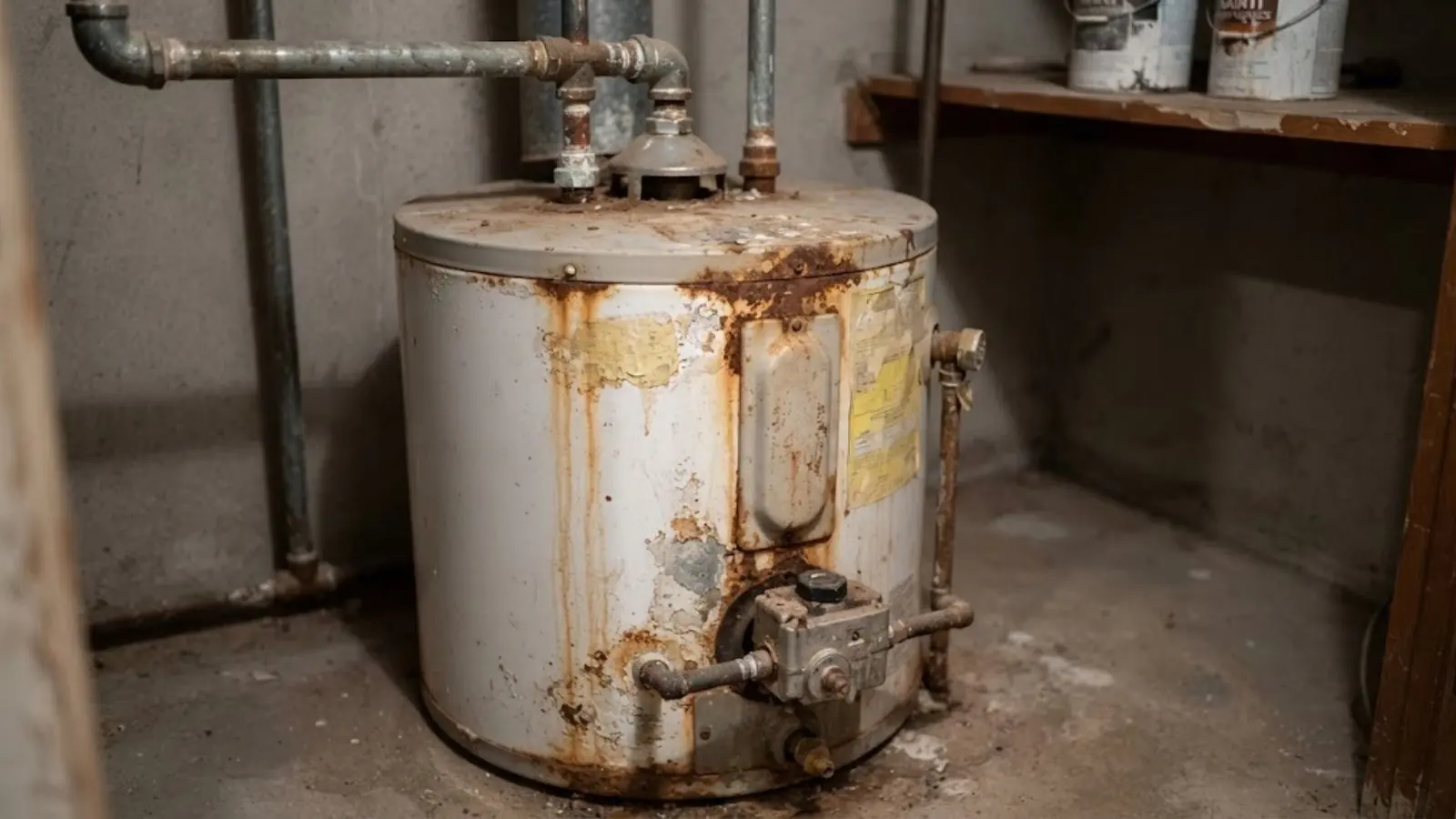
Installing a new water heater is a half-day job in most houses, and what happens in the first ten minutes decides how smoothly the rest goes. A clear path, a dry floor and answers to a few questions let the plumber start work instead of moving boxes. This guide covers what to prepare, what the plumber does and what to check afterward.
Before the plumber arrives
- Clear a path from the front door to the water heater, wide enough for a tank on a hand truck
- Move anything stored within a few feet of the heater, and clear the floor around it
- Know where the main water shutoff and the gas shutoff are
- Take a photo of the data plate on the old unit, which lists size and fuel
- Plan for a few hours without hot water, and for a short pause in water service
- Keep children and pets away from the work area
If the heater sits in an attic or a tight closet, tell the dispatcher before the visit. Access decides how long the job takes and what equipment the plumber brings.
What the plumber does
- Shuts off the water, the gas or the power, and drains the old tank
- Disconnects the water lines, vent and gas or electric connection
- Removes the old tank and sets the drain pan if the location calls for one
- Sets the new tank, levels it and connects the water lines with new shutoffs and flexible connectors
- Installs the temperature and pressure relief valve and a full-size discharge pipe
- Connects gas with a sediment trap and tests every joint, or makes the electrical connection
- Checks the vent and draft on gas units
- Fills the tank, bleeds the air, relights or powers up and sets the temperature
- Walks you through the controls and checks for leaks once more
Ready to schedule?
Call and tell us the size and fuel of your tank. We will plan the visit.
What gets added or upgraded
| Add-on | Why it may be needed | Who decides |
|---|---|---|
| Expansion tank | Closed system with a pressure regulator or backflow device | Code and the plumber's check |
| Drain pan and drain line | Heater sits above finished space | Code and location |
| New vent or flue | Old vent is corroded or undersized | Gas install code |
| New shutoff valves | Old ones do not close | Plumber's judgment |
| Seismic or restraint strap | Where required | Code |
These items are the reason two installs of the same tank can differ in cost. A good quote lists them so you can see what is included.
Haltom City local note
Haltom City has adopted the 2021 International Plumbing Code (IPC). The city's permit form lists a per-item fee for water heaters, and its published material does not state clearly whether a replacement needs a permit, so check with the Haltom City building department. Inspections run Monday through Thursday at City Hall on Haltom Road, which affects scheduling if a permit applies.
The 2025 water quality report lists local hardness of 108 to 150 parts per million, about 6 to 9 grains per gallon. Plan to flush the new tank once a year, and consider a softener if scale is already a problem in the house.
Surprises that change the plan
Most install-day delays come from things nobody could see beforehand. A gas shutoff that does not close, a corroded water line that breaks when the old connector comes off, a vent that was cut too short years ago or a floor under the old tank that has rotted. None of these is unusual in an older house. A good plumber stops, explains and gives you a price for the extra work before continuing, so you are choosing rather than being surprised on the invoice.
Ask whether the quote assumes a straight swap. If the old tank is in a tight closet or an attic, the removal route alone can add time, and that should be on the table before the day starts.
After the install
- Set the thermostat to a temperature that balances comfort and scald safety, which many guidelines put around 120 degrees Fahrenheit
- Check around the base and fittings for drips in the first day or two
- Note the location of the relief valve and its discharge pipe, and never cap it
- Register the warranty and save the receipt
- Put a reminder on the calendar to flush the tank in a year
If the water is rusty for a few minutes after the install, run a tap until it clears. If it persists, tell the plumber. Air in the lines can make faucets sputter for a short time.
If something goes wrong
A pilot that will not stay lit, a tank that does not heat or a dripping relief valve on a new install deserves a call back. The installer should come back to fix an installation fault. If you are weighing options before the job, water heater installation covers the sizing and code details, and water heater replacement covers what to do when the old tank has failed. We serve Haltom City and neighboring North Richland Hills, and our service area page lists the rest.
Need a new water heater?
Call any hour. We answer 24/7.
Install day questions
Most take a few hours when the new unit matches the old. Moves, fuel changes and code upgrades take longer.
Someone should be there to give access and sign off at the end.
Water is shut off to the house for part of the job, usually a short time.
Many guidelines suggest around 120 degrees Fahrenheit for safety. Ask the installer about your household.
Permitted plumbing work is inspected. Ask the city whether your replacement needs a permit.